

The Rise of the 19th Century General Store: America's Rural One-Stop Shops
Posted on January 15 2026

The Rise of the 19th Century General Store: America's Rural One-Stop Shops
In the vast expanses of 19th century America, where sprawling farmlands and isolated communities dotted the landscape, the general store emerged as a beacon of convenience and community. These humble establishments, often the heart of rural life, stocked everything from dry goods like flour and fabric to fire pit essentials. Far more than mere retail outlets, they served as social hubs where farmers traded stories, mail exchanged, and necessities were bartered.
The origins of the American general store trace back to the colonial period, but it was during the 19th century that they truly rose to prominence. As westward expansion accelerated following the Louisiana Purchase in 1803 and the Gold Rush of 1849, pioneers needed reliable sources for supplies in remote areas. Urban markets were distant, and transportation was rudimentary. Enter the general store: a single building that provided an astonishing array of goods, eliminating the need for multiple specialty shops. By the mid-1800s, these stores dotted every small town and crossroads, from the Appalachian hills to the Great Plains.

What made the 19th century general store so revolutionary was its "one-stop shop" model. Proprietors, often local entrepreneurs with a keen eye for community needs, crammed shelves with diverse inventory. Dry goods formed the backbone, whether it be bolts of calico fabric for sewing dresses, sacks of sugar and coffee beans ground on-site, or barrels of molasses. Hardware sections offered tools like hammers, nails, and plows essential for farming life. For the hearth and home, you'd find cast iron skillets for cooking over open flames, lanterns fueled by kerosene, and even basic medicines like laudanum or patent remedies hawked in colorful bottles.
Beyond staples, these stores catered to everyday luxuries and necessities. Imagine a farmer's wife browsing spices imported from afar or a child eyeing penny candies in glass jars. Tobacco, pipes, and sewing notions shared space with boots, hats, and ready-made clothing. Potbelly stoves in the center provided warmth, around which men gathered to discuss everything in daily life, from politics to weather to the latest news from the telegraph. In addition, the storekeeper often doubled as postmaster, banker, and notary, fostering a sense of interconnectedness in otherwise isolated rural America.
Visually, the interior of a typical 19th century general store was a feast for the senses—wooden counters worn smooth by countless transactions, shelves groaning under the weight of tins and crates, and the air thick with scents of coffee, leather, and spices.
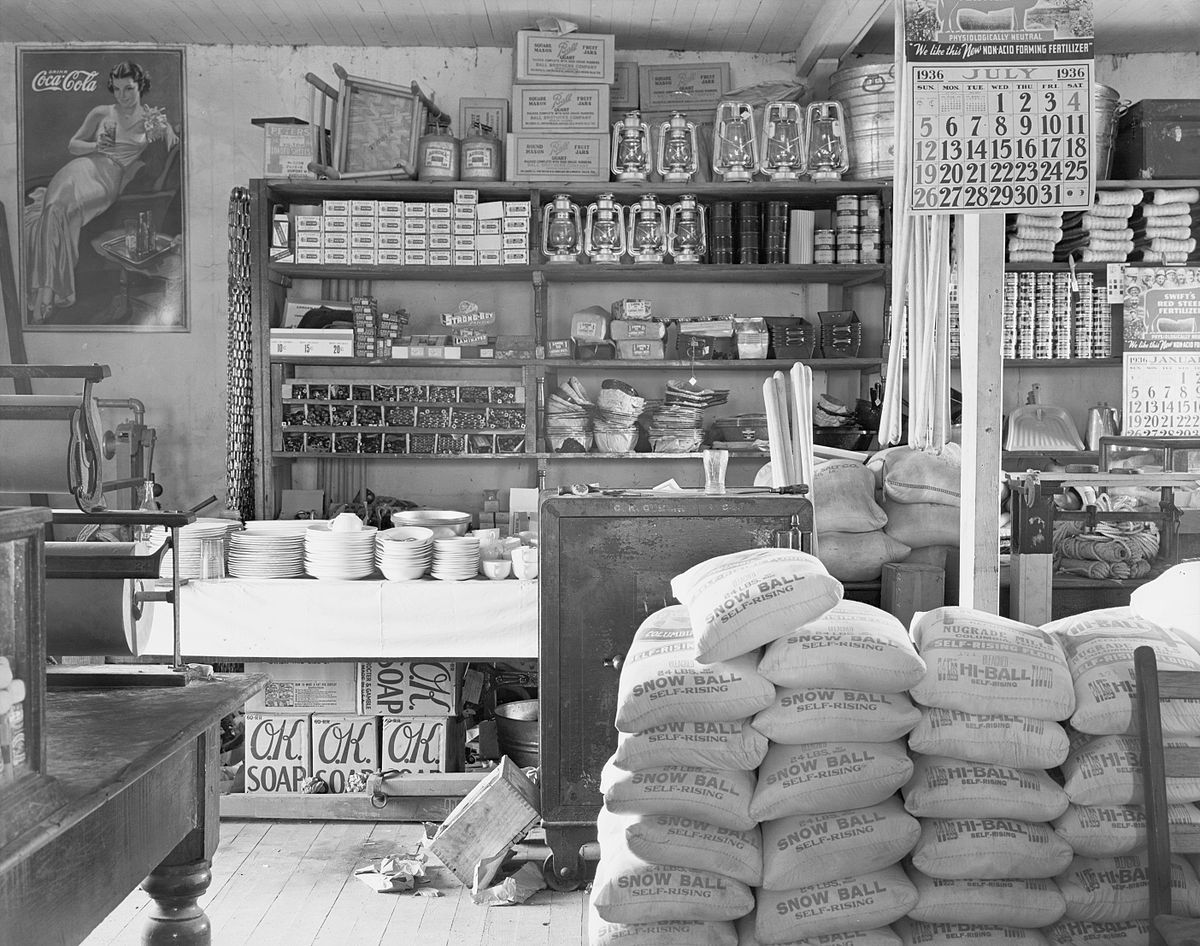
Paintings and photographs from the era depict cluttered yet organized spaces, with ladders reaching high shelves and scales for weighing goods. This setup wasn't just practical; it symbolized American ingenuity and self-reliance, embodying the entrepreneurial spirit that defined the young nation.
As the century progressed, general stores adapted to technological shifts. The introduction of railroads in the 1830s and beyond brought exotic goods like canned foods and factory-made textiles, reducing reliance on local production. Yet, challenges arose. Economic panics like in 1873 strained rural economies, and the rise of mail-order catalogs from companies like Montgomery Ward in 1872 began chipping away at their monopoly. By the late 19th century, urbanization and department stores in cities signaled the beginning of their decline, though they persisted in rural areas well into the 20th century.
Fast-forward to today, and the legacy of the 19th century general store lives on in our appreciation for timeless, durable home items. In an age of fast fashion and disposable goods, there's a growing desire for pieces that evoke this bygone era's quality and functionality. We believe that Historia, with our selection of American-made products that hold historic soul, bridges this gap.
Our 12-Inch Cast Iron Skillet is probably the quintessential general store find on shophistoria.com. Cast iron was prized for its heat retention and versatility—farmers used similar skillets for everything from cornbread to searing meat. Today, it's a timeless kitchen staple that seasons with use. Another gem is the Leather Journal, where general stores sold bound ledgers and notebooks for recording accounts or journaling travels.
For winter ambiance, the 20 oz Candleberry Apple Brown Betty Candle will provide that cozy home atmosphere, while the Sandalwood-Patchouli soap bar will help you smell fresh. Lastly, the Skali Coupe Dinner Plate echoes the simple ceramic ware found in general stores. Back then, plates were sturdy and unadorned, meant for family meals after a long day of work.
The rise of the 19th century general store reflects broader American themes: resilience, community, and innovation. In an era before big-box retailers, they connected people to the world, stocking essentials that sustained life on the frontier. As we face our own modern isolations, perhaps there's wisdom in revisiting these roots. Whether through visiting museums, attending historical reenactments, or curating your home with timeless pieces, the general store's legacy endures. By embracing timeless home goods today, we honor that heritage, creating spaces that feel both nostalgic and new.
Sources:
- https://www.thehenryford.org/explore/blog/shopping-at-an-1880s-general-store (Shopping at an 1880s General Store – detailed on typical goods like sugar/tea in bulk, canned foods, baking powder, grooming items, lamps, cigars; from Greenfield Village's restored J.R. Jones store)
- https://backinmytime.blogspot.com/2012/08/the-general-store.html (Back In My Time: The General Store – descriptions of interior, stocking via drummers/railroads, shift from necessities to luxuries post-Civil War)
- https://www.newworldencyclopedia.org/entry/General_store (General store – historical evolution, role in remote areas, licensed trading posts)
- https://shannonselin.com/2021/12/how-did-people-shop-early-1800s (How did people shop in the early 1800s? – markets, peddlers, general stores, bartering)
- https://www.homestead.org/homesteading-history/history-of-the-general-store (The American General Store: A Cover Story – based on Thomas D. Clark's "Pills, Petticoats, and Plows: The Southern Country Store," Southern focus but broad insights)
- https://19thcentury.us/19th-century-general-store (Discover the LEGACY of 19th CENTURY General Stores! – lists typical products: flour/sugar/salt/coffee/tea/spices/canned goods, provisions like rice/beans)
- https://www.morningagclips.com/the-general-store-the-farmers-one-stop-shop (The General Store: The Farmer’s One-Stop Shop – farmer/rancher reliance, barter/credit, evolution from trading posts)

© Copyright 2026 Historia LLC - All Rights Reserved
0 comments